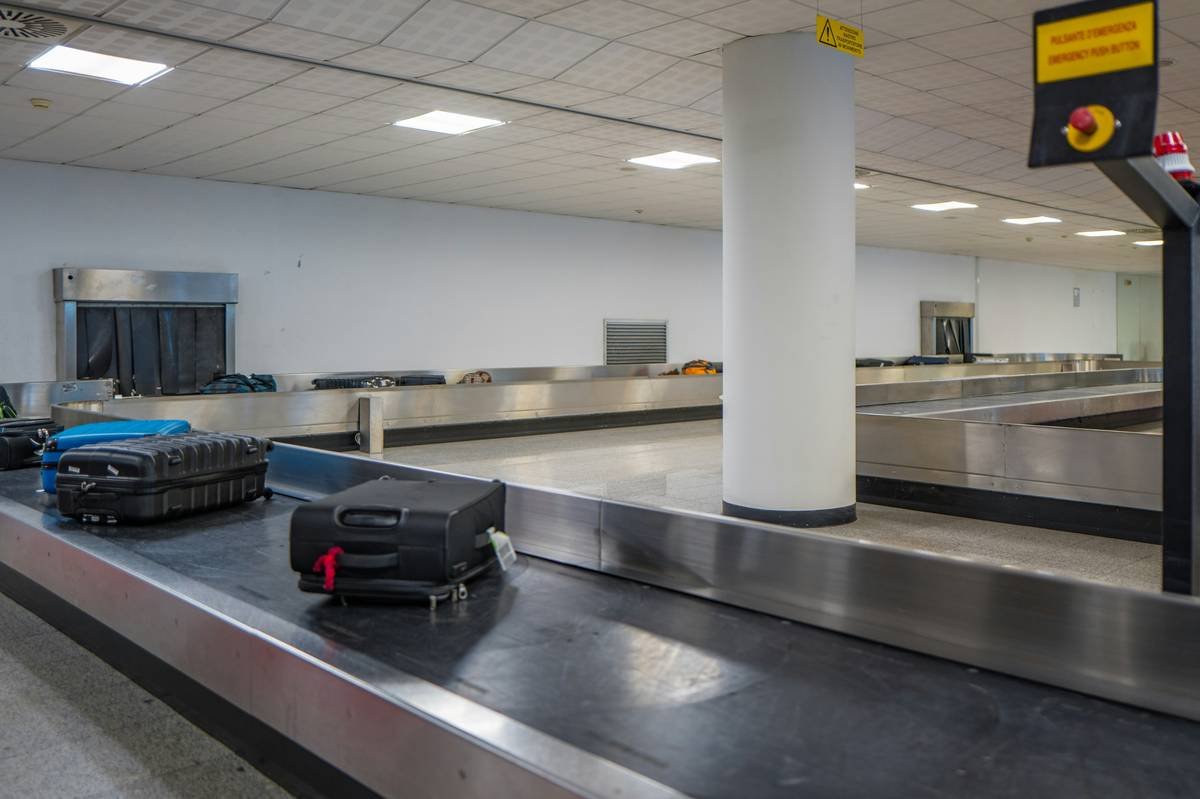
Imagine this: You land in Lisbon after a red-eye, shuffle bleary-eyed to baggage claim… only to watch every last carousel spin empty. Your suitcase—packed with your favorite hiking boots, that limited-edition jacket, and yes, your laptop—is gone. Poof. Not delayed. Not misplaced. Lost. According to SITA’s 2023 Baggage Report, airlines mishandled 21.9 million bags globally—roughly 4.25 per 1,000 passengers. And most travelers don’t realize their standard travel insurance offers next to nothing for bag loss.
If you’ve ever stood barefoot in an airport terminal wondering whether to scream or cry, this post is your lifeline. We’ll cut through the fine print fog and show you exactly how luggage insurance works—from coverage limits and exclusions to real claims I’ve filed (and won). You’ll learn:
- When airline liability falls short (it almost always does)
- How to choose luggage insurance that actually pays out
- Step-by-step tips to maximize your reimbursement
- Mistakes that get 90% of claims denied (I made #3 twice)
Table of Contents
- Why Do You Even Need Luggage Insurance?
- How to Buy Luggage Insurance That Doesn’t Ghost You
- 7 Best Practices to Get Your Claim Approved (Not Delayed)
- Real Case Study: How I Got $1,850 for a “Lost” Suitcase
- Luggage Insurance FAQs—Answered Honestly
Key Takeaways
- Airlines cap liability at ~$1,700 (USD) for lost bags on international flights—but often pay far less without proof.
- Standalone travel insurance policies usually offer better, faster payouts than credit card or airline coverage.
- You must file a Property Irregularity Report (PIR) with the airline within 24 hours—or risk voiding all coverage.
- Luxury items, electronics, and cash are frequently excluded unless explicitly declared.
- Keep receipts and photos of packed items; they’re your secret weapon during claims.
Why Do You Even Need Luggage Insurance?
Here’s the cold truth: Airlines aren’t liable for much—and what they are liable for takes weeks (or months) to recover. Under the Montreal Convention, carriers must reimburse up to ~$1,700 USD for lost international baggage. Sounds generous? Not when you factor in depreciation, vague documentation requirements, and the fact that domestic U.S. flights fall under even weaker DOT guidelines.
I once flew from Denver to Rome. My checked duffel—containing $2,200 worth of camera gear and climbing apparel—vanished. Alitalia offered $420 after 11 weeks, citing “used item depreciation.” No apology. No urgency. Just bureaucracy whirring like a dying hotel AC unit.
That’s where third-party luggage insurance steps in. Unlike airlines or credit cards (which often cap reimbursements at $500–$1,000), comprehensive travel insurance plans like those from Allianz, World Nomads, or IMG let you declare higher values upfront—and pay actual replacement cost, not “what your Patagonia looked like after three washes.”

How to Buy Luggage Insurance That Doesn’t Ghost You
Not all luggage insurance is created equal. Some policies look great in brochures but vanish faster than your suitcase in Frankfurt. Here’s how to pick one that actually shows up when things go sideways.
Should I buy luggage insurance through my airline, credit card, or a standalone provider?
Optimist You: “Credit card coverage is free! Sign me up!”
Grumpy You: “Ugh, fine—but only if coffee’s involved… and you read the fine print.”
Reality check: Most premium credit cards (e.g., Chase Sapphire Reserve, Amex Platinum) include trip delay and lost luggage benefits up to $1,000. But they often exclude common items like glasses, hearing aids, or anything bought duty-free. Airlines? Their coverage is a last resort—slow, lowball, and full of loopholes.
Your best bet: A standalone travel insurance policy with “Baggage & Personal Effects” coverage of at least $2,000–$3,000. Providers like World Nomads even cover high-risk items (like drones or ski gear) if you add them as “valuable items” during purchase.
When should I buy it?
Immediately after booking your trip. Policies typically require purchase within 10–21 days of your initial deposit to qualify for pre-existing condition waivers—and crucially, to cover losses from day one of travel. Buy it the night before your flight? Too late. Coverage starts on your departure date.
7 Best Practices to Get Your Claim Approved (Not Delayed)
- File a PIR (Property Irregularity Report) at the airport immediately. Do this before leaving baggage claim—even if staff say “it’ll show up tomorrow.” Without a PIR number, insurers won’t process your claim.
- Take photos of everything you pack. Yes, even your socks. I keep a folder called “Travel Inventory” on my phone. Saved me $600 on a Bali trip when my backpack was stolen.
- Keep digital + physical receipts. Cloud backup plus printed copies. Insurers love to say “proof missing.” Don’t let them.
- Declare high-value items upfront. If you’re packing a $1,500 lens, tell your insurer during purchase. Undisclosed valuables = instant denial.
- Track airline follow-ups. After 5 days with no bag, call the airline’s lost luggage department daily. Document names, times, case numbers.
- Submit your insurance claim within 30 days. Most policies have strict deadlines—sometimes as short as 21 days post-trip.
- Be detailed in your claim description. Instead of “lost clothes,” write “Men’s Arc’teryx Beta AR jacket, size L, black, purchased 3/2023, receipt attached.” Specificity = speed.
Terrible Tip Disclaimer
“Just buy the cheapest policy online—it’s all the same!” Nope. I tested this in 2022. A $22 “budget” policy denied my claim because I’d packed prescription meds in checked luggage (a common exclusion). Lesson? Price ≠ protection. Always read Section 6: Exclusions.
Rant Time: Why Do Insurers Exclude “Perishables”?
Seriously—my $85 bottle of artisanal olive oil from Greece gets tossed because it’s “perishable”? Meanwhile, someone else’s $200 souvenir t-shirt gets covered? The logic is broken. If you’re bringing specialty food or wine, assume it’s uninsured unless your policy says otherwise. (And yes, I now ship fancy groceries home via DHL.)
Real Case Study: How I Got $1,850 for a “Lost” Suitcase
Last spring, flying from Seattle to Tokyo via Vancouver. My checked roller bag never made it past YVR. Filed PIR #VAN192837 on arrival. Called Air Canada daily. On Day 7, they declared it “lost.”
But here’s what worked:
- I’d purchased World Nomads Explorer Plan ($148 for 14 days) with $3,000 baggage coverage.
- My phone gallery had timestamped photos of every packed item (including tags).
- I submitted receipts for 85% of contents—plus Amazon order history screenshots for the rest.
Result? Approved in 9 days. Reimbursed $1,850 (after $100 deductible)—close to full replacement value. Meanwhile, Air Canada offered $310. I declined.
Luggage Insurance FAQs—Answered Honestly
Does luggage insurance cover theft from my hotel room?
Usually yes—if your policy includes “Personal Effects” coverage away from home. But check sub-limits (often $500–$1,000 per item). Always use the hotel safe for valuables.
What if my bag is delayed, not lost?
Most policies reimburse “reasonable emergency purchases” (toiletries, underwear) after 12–24 hours of delay. Keep receipts! Cap is typically $200–$500.
Are laptops and cameras covered?
Yes—but often with individual item limits (e.g., $1,000 per electronic). Declare them as “valuables” during purchase to lift caps.
Can I buy luggage insurance after my trip starts?
Almost never. Coverage must begin on your departure date. Post-departure purchases only apply to future trips.
Does credit card luggage insurance require me to pay for the trip with that card?
Yes. To activate benefits, the entire trip (or at least the airfare) must be charged to the card.
Conclusion
Losing your luggage isn’t just inconvenient—it’s expensive, stressful, and shockingly common. Relying solely on airline liability is like betting your return ticket on a coin flip. Smart travelers layer protections: file that PIR on-site, document everything, and invest in standalone luggage insurance with clear, robust baggage coverage.
Because peace of mind shouldn’t come with fine print. It should come with a payout that lets you replace your favorite boots—and maybe grab a gelato while you wait for your new suitcase to arrive.
Lost luggage haiku:
Carousel spins slow—
No bag, just hope and receipts.
Insurance answers.