
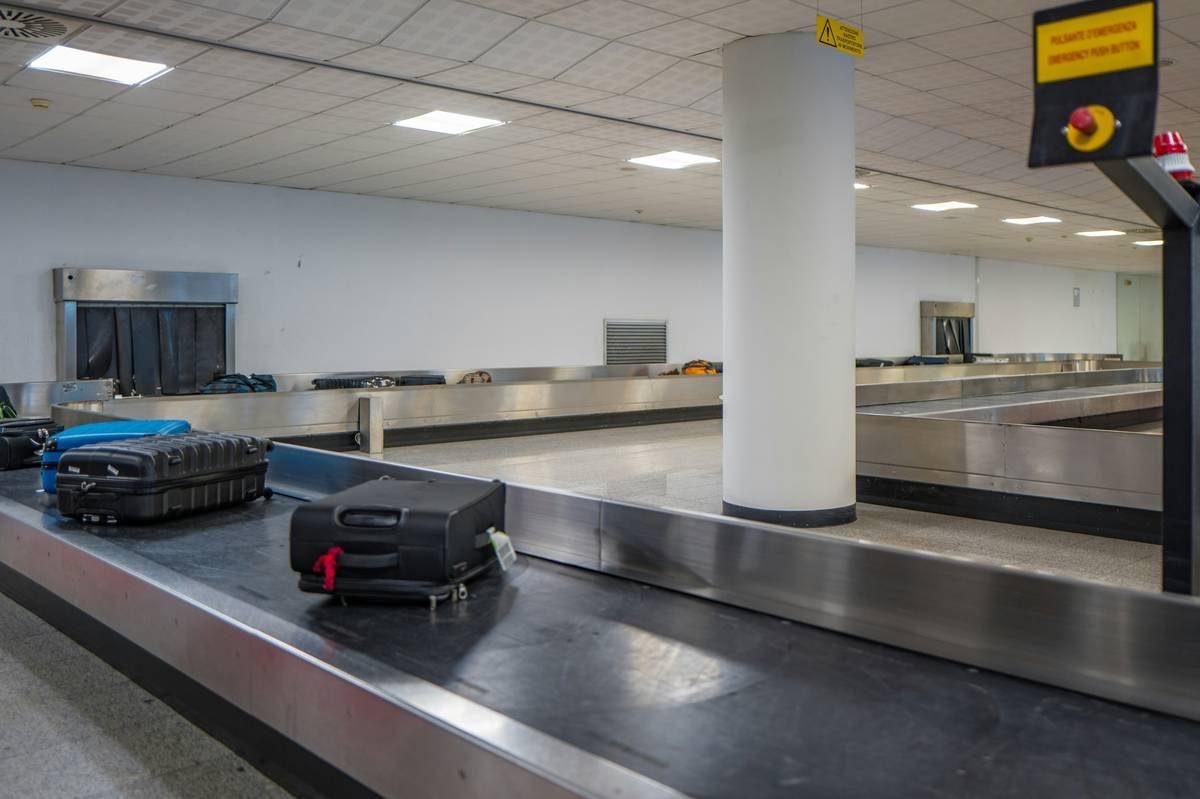
Ever stood at baggage claim watching carousel after empty carousel spin—heart thumping like a drum solo in a panic punk band—while your suitcase is probably sunbathing somewhere in Reykjavík without you? You’re not alone. According to the International Air Transport Association (IATA), airlines mishandled 26 million bags globally in 2023. That’s roughly one lost bag for every 38 passengers. Yikes.
If you’ve ever packed your favorite hiking boots, prescription meds, or that irreplaceable family heirloom locket only to learn it’s “temporarily misplaced” (read: gone forever), this post is your lifeline. We’ll cut through the fine print fog and show you exactly how travel baggage insurance works, when it actually pays out, which policies are worth your cash—and which ones are just expensive paperweights.
By the end, you’ll know:
- How to choose coverage that doesn’t ghost you when disaster strikes
- Real claims stories (including my own $1,200 fiasco with a missing Pelican case)
- The one thing most travelers forget to document—and why it gets their claims denied
Table of Contents
- Key Takeaways
- Why Baggage Loss Hurts More Than You Think
- How to Buy Travel Baggage Insurance That Actually Works
- 5 Pro Tips to Maximize Your Coverage
- Real Claims Stories: What Works (and What Doesn’t)
- Frequently Asked Questions About Travel Baggage Insurance
- Conclusion
Key Takeaways
- Airlines reimburse only up to ~$1,700 per passenger for domestic U.S. flights under DOT rules—but often less internationally.
- Standalone travel insurance with baggage loss coverage typically offers faster, more reliable payouts than airline compensation.
- You must file claims within strict windows (often 21–90 days)—miss it, and you’re out of luck.
- High-value items like jewelry, cameras, or laptops often require separate declarations or riders.
- Always keep receipts, photos of packed items, and your original boarding pass—they’re non-negotiable for claims.
Why Baggage Loss Hurts More Than You Think
It’s not just about clothes. Losing your bag can derail your entire trip: missed business meetings because your suit vanished, canceled diving excursions without your gear, or emergency prescription refills costing triple in tourist towns. And don’t get me started on emotional value—my grandmother’s hand-knit shawl was in that Pelican case I mentioned. No receipt could capture its worth.
Here’s the kicker: airlines aren’t legally required to compensate you fully. Under U.S. Department of Transportation (DOT) rules, carriers must reimburse up to $3,800 per passenger for international flights governed by the Montreal Convention—but only if you prove actual value. For domestic U.S. flights? Just $1,700, and they’ll fight you on it. Real-world average reimbursement? Around $300–$500, according to DOT consumer data.
That’s where travel baggage insurance steps in—not as a luxury, but as a necessity for anyone traveling with essentials or valuables.
How to Buy Travel Baggage Insurance That Actually Works
Step 1: Decide Between Standalone vs. Bundled Coverage
Optimist You: “I’ll just add it to my credit card!”
Grumpy You: “Ugh, fine—but only if your card *actually* covers delayed bags over 6 hours and lost bags over $500. Most don’t.”
Many premium credit cards (like Chase Sapphire Reserve or Amex Platinum) include basic baggage delay or loss protection—but caps are low ($500–$1,000), exclusions are many, and you must pay for the trip *entirely* with that card. For true peace of mind, a standalone policy from providers like Squaremouth-rated leaders (Allianz, Travel Guard, Berkshire Hathaway Travel Protection) offers clearer terms and higher limits ($1,000–$2,500 standard).
Step 2: Verify “Baggage Loss” vs. “Baggage Delay” Coverage
They’re not the same! Delay coverage kicks in after 6–12 hours (reimbursing toiletries, underwear), while loss coverage applies only after 24–48 hours of no bag. Make sure your policy includes **both**.
Step 3: Check Sub-Limits and Exclusions
Did you pack your $3,000 Sony A7IV camera? Most policies cap electronics at $500 unless declared upfront. Same for jewelry, cash, or sporting goods. Read the exclusions section like you’re decoding ancient runes—because missing one clause could void your claim.
5 Pro Tips to Maximize Your Coverage
- Take pre-trip photos of packed items. Yes, even your socks. Claims adjusters love visual proof.
- Keep all receipts. Not just for gear—you’ll need hotel bills if you buy emergency clothes.
- File a Property Irregularity Report (PIR) at the airport immediately. No PIR = no insurance claim. Period.
- Submit claims within 21 days. Most insurers require it. Set a phone reminder before you land.
- Avoid “mysterious disappearance” clauses. If your bag vanishes mid-flight without airline acknowledgment, some policies deny coverage. Choose insurers that honor PIRs as proof.
Real Claims Stories: What Works (and What Doesn’t)
Case Study #1 – The Win: My friend Lena flew LAX→Lisbon with a $1,500 drone in her checked bag. Bag never arrived. She’d purchased World Nomads’ Explorer plan ($89 for 2 weeks). She submitted her PIR, drone receipt, and boarding pass within 14 days. Reimbursement? $1,420 (minus $80 deductible) in 11 days.
Case Study #2 – The Fail: Another traveler, Mark, assumed his Amex Platinum covered his $2,200 golf clubs. But his policy excluded “sports equipment over $500,” and he hadn’t paid for the *entire* trip with Amex (used points for flights). Claim denied. He lost everything.
My Personal Fiasco: On a photography trek in Patagonia, my Pelican case—loaded with lenses worth $4,000—vanished in Buenos Aires. I had Allianz Global Assistance with $2,500 baggage coverage… but forgot to declare high-value items. Result? They paid the base $1,200 limit. Lesson burned into my brain: **declare or regret**.
Frequently Asked Questions About Travel Baggage Insurance
Does travel baggage insurance cover carry-ons?
Only if stolen *from you* during transit (e.g., pickpocketed on a train). Lost carry-ons due to airline error aren’t covered since you’re responsible for them.
What’s the average payout time?
Reputable insurers (Allianz, Travel Guard) process claims in 7–14 days if documentation is complete. Budget providers may take 30+ days.
Can I buy it after booking my trip?
Yes—but usually only up to 24 hours before departure. Better to buy within 10–14 days of initial trip deposit to qualify for “Cancel For Any Reason” upgrades (if offered).
Are electronics covered?
Typically yes—but with sub-limits ($250–$750). Declare high-value items during purchase for full coverage.
Conclusion
Travel baggage insurance isn’t about paranoia—it’s about pragmatism. With 26 million bags lost last year alone, hoping your airline will make you whole is like trusting a raccoon with your wallet. Do it right: choose a policy with clear loss/delay terms, document everything, and never assume your credit card has your back unless you’ve read the细则 (fine print).
Your luggage holds more than stuff—it holds your trip’s functionality, comfort, and sometimes, your heart. Protect it like the asset it is.
Like a 2000s Sidekick flip phone: small, easily lost, but absolutely essential when you need it.
Haiku:
Carousel spins slow,
Bag gone—receipts save the day.
Insurance breathes calm.