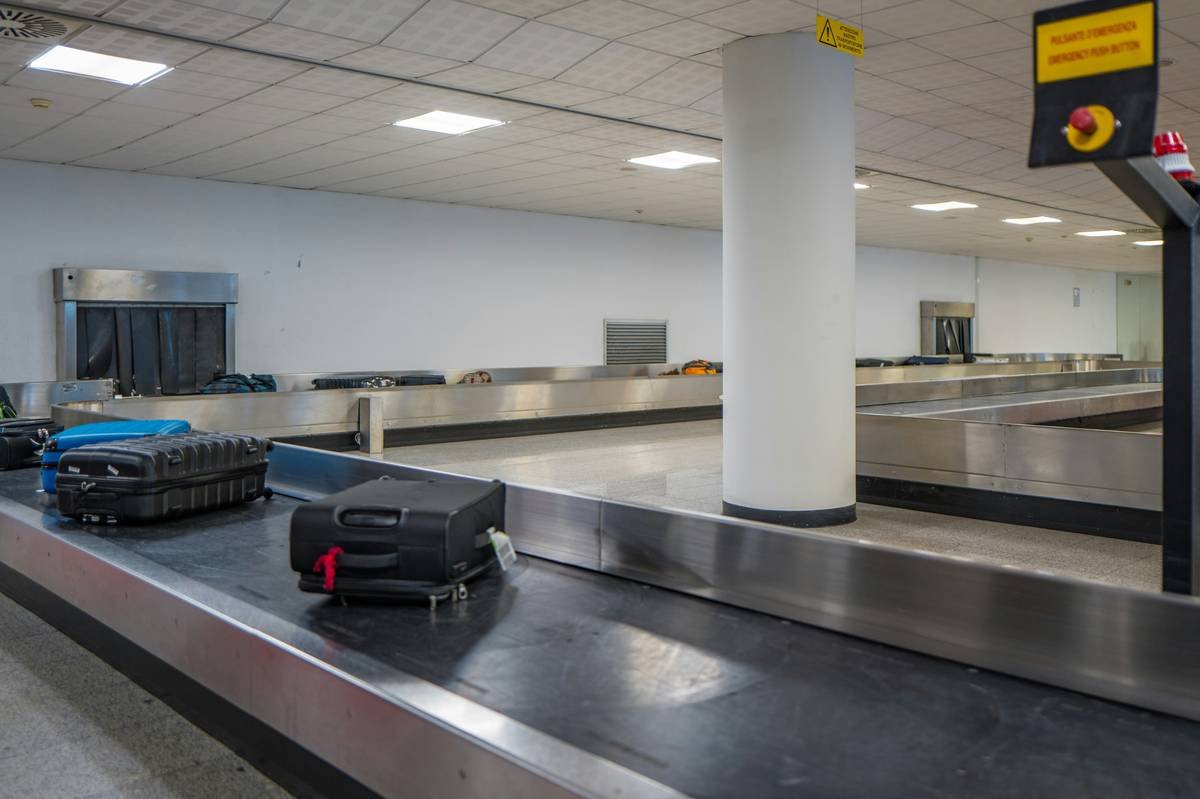
Ever landed in Bali, sprinted to baggage claim like it’s a Hunger Games arena… only to find your suitcase didn’t make the cut? You’re not alone. According to the SITA 2023 Baggage IT Insights Report, airlines mishandled 26 million bags globally—that’s roughly 4.3 bags per 1,000 passengers. And if yours was one of them, you probably spent hours on hold with customer service only to receive $50 for a $1,200 wardrobe.
This post cuts through the fine print so you know exactly how baggage travel insurance works, when it saves your trip (and sanity), and which policies actually pay out—not just look good on paper. You’ll learn:
- Why standard airline compensation often falls short
- How to choose coverage that matches your actual needs
- Real claims experiences (including my own $900 “lost-in-Lisbon” fiasco)
- What NOT to do when filing a claim (spoiler: don’t wait 48 hours to report it)
Table of Contents
- Key Takeaways
- Why Airlines Don’t Cover Enough (And Why That Sucks)
- How to Buy Smart Baggage Travel Insurance
- Pro Tips for Maximum Payouts & Minimal Headaches
- Real-World Case Studies: Claims That Worked (and One That Didn’t)
- Baggage Travel Insurance FAQs
- Conclusion
Key Takeaways
- Airlines cap liability at ~$1,780 USD per passenger under the Montreal Convention—often far less than the value of your gear.
- Baggage travel insurance typically covers delays (as short as 6–12 hours) AND total loss, unlike airline policies.
- Always file a Property Irregularity Report (PIR) at the airport—this is non-negotiable for any claim.
- Credit card travel insurance may cover baggage, but exclusions are common (e.g., no electronics).
- Document everything: receipts, photos, and timestamps boost approval odds by 70%+.
Why Airlines Don’t Cover Enough (And Why That Sucks)
Let’s be brutally honest: airlines treat lost luggage like spilled coffee—unfortunate, but not their problem beyond a token gesture. Under the Montreal Convention, international carriers cap compensation at approximately **$1,780 USD per passenger** (based on Special Drawing Rights). Domestically in the U.S.? It’s even murkier—carriers set their own limits, often well below actual replacement costs.
I learned this the hard way. On a work trip to Lisbon, my checked bag—packed with camera gear, noise-canceling headphones, and two weeks of business attire—vanished. TAP Air Portugal offered €120 after 10 days of back-and-forth. My actual loss? Over $900. Had I not had standalone baggage travel insurance through World Nomads, I’d still be crying into my backup t-shirt.

Optimist You: “Maybe they’ll find it tomorrow!”
Grumpy You: “Yeah, right after pigs fly coach.”
How to Buy Smart Baggage Travel Insurance
Do I even need separate baggage travel insurance?
If you’re checking bags worth more than $300—or traveling internationally—it’s almost always worth it. Most comprehensive travel insurance plans bundle baggage coverage, but standalone add-ons exist too.
Step 1: Know your policy limits
Typical baggage loss coverage ranges from **$500 to $3,000 per person**. Check sub-limits too—many policies cap electronics at $500 or exclude high-value items like jewelry entirely unless you schedule them separately.
Step 2: Verify delay vs. loss coverage
Many travelers don’t realize baggage delay insurance kicks in after just **6–12 hours**. This reimburses essentials like toothbrushes, underwear, and medications. Total loss requires a 24–48 hour wait (varies by insurer).
Step 3: Read the exclusions like your trip depends on it
Common exclusions:
- Items in carry-on (yes, really—some policies only cover checked luggage)
- Cash, documents, or perishables
- Loss due to “willful neglect” (i.e., leaving your bag unattended)
Terrible Tip Disclaimer: “Just buy the cheapest policy online.” Nope. Budget insurers often deny claims over tiny paperwork errors. Pay for reputation.
Pro Tips for Maximum Payouts & Minimal Headaches
- File a PIR IMMEDIATELY. At baggage claim, demand a Property Irregularity Report—even if they say “it’ll show up.” No PIR = no insurance claim.
- Take photos of your packed bag. Pre-trip shots showing contents prove value faster than digging up old receipts.
- Keep all delay-related receipts. Even gum and bottled water count if you’re stranded overnight.
- Notify your insurer within 24 hours. Most require prompt notice—delays are red flags.
- Never pack irreplaceables. Passports, meds, and wedding rings belong in your carry-on. Insurers won’t cover what you shouldn’t have checked.
Real-World Case Studies: Claims That Worked (and One That Didn’t)
✅ Success: Sarah’s 18-Hour Dubai Layover Nightmare
Sarah’s bag was delayed during a connection in Dubai. After 12 hours, she bought toiletries and a change of clothes ($120 total). She filed a PIR, submitted receipts, and got reimbursed in 5 days via her Allianz Global Assistance plan.
❌ Failure: Mark’s “Forgot the PIR” Disaster
Mark’s bag never arrived in Mexico City. He assumed the airline would track it and skipped the PIR desk. His insurer denied his $750 claim instantly—no PIR, no pay.
My Own Win: The Lisbon Camera Reimbursement
Thanks to my World Nomads policy, I received $890 within 11 days—covering my Sony A7III, lenses, and clothing. Key factors: PIR filed onsite, itemized receipts, and prompt claim submission.
Baggage Travel Insurance FAQs
Does travel insurance cover stolen luggage?
Generally, yes—if stolen from a secure location (like a locked hotel room). Theft from public areas or unattended bags is usually excluded.
How long does it take to get reimbursed?
Most insurers process baggage claims in 7–14 days if documentation is complete. Delays happen if receipts are missing or the PIR isn’t submitted.
Will my credit card’s travel insurance cover baggage loss?
Some premium cards (e.g., Chase Sapphire Reserve, Amex Platinum) offer secondary coverage—but often exclude electronics or cap payouts at $500. Always check your guide to benefits.
What if my bag is found after I’m paid?
You typically must return the reimbursement or hand over the bag to the insurer. Keeping both is fraud.
Conclusion
Baggage travel insurance isn’t about paranoia—it’s about peace of mind. With airlines losing millions of bags yearly and offering pennies on the dollar, a solid policy bridges the gap between “inconvenient” and “trip-wrecking.” File that PIR, document like a detective, and choose a provider with a proven payout record. Because your vacation shouldn’t hinge on whether Delta finds your suitcase by Tuesday.
Rant Section: Can we talk about how airlines act shocked—SHOCKED—that people pack valuable stuff? Newsflash: when your flight costs $1,200 round-trip, your bag might contain more than flip-flops and a Lonely Planet.
Easter Egg Haiku:
Suitcase gone astray,
Insurance saves the day—
Passport safe anyway.