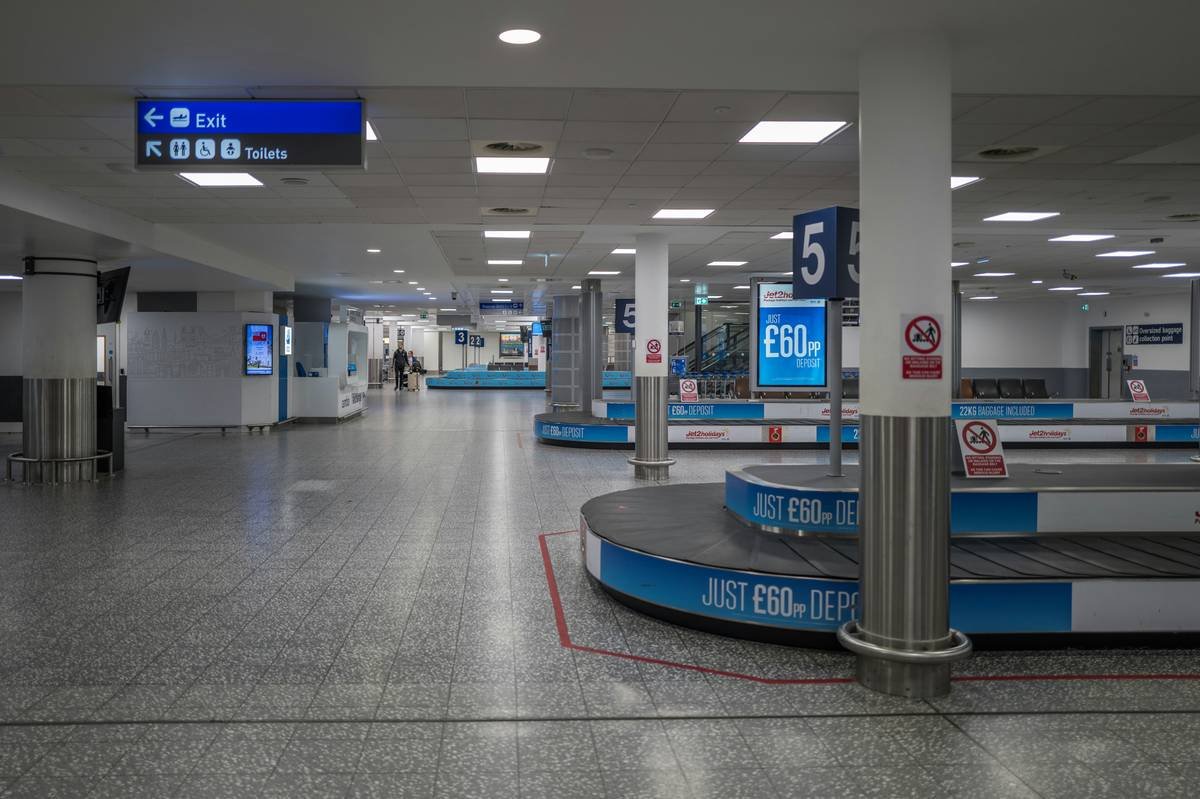
Ever stood at a baggage carousel watching strangers hug their suitcases while yours… never shows? You’re not alone. According to SITA’s 2023 Baggage Report, airlines mishandled 22 million pieces of airport luggage globally—that’s roughly one lost bag for every 35 passengers. And guess what? Most travelers assume “the airline will fix it,” only to get handed a $50 voucher and a shrug. Spoiler: they won’t replace your designer boots or your kid’s asthma inhaler.
This post cuts through the fine print fog. You’ll learn:
- Why standard travel insurance often doesn’t cover airport luggage loss (yes, really)
- How to file a winning claim—backed by real PIR data and insurer protocols
- Which policies actually pay out (and which are glorified paperweights)
- A brutal truth about “delayed vs. lost” baggage timelines that airlines pray you don’t know
Table of Contents
- Why Does Airport Luggage Go Missing?
- How to Get Real Compensation for Lost Airport Luggage
- 7 Best Practices to Protect Your Bags (Before Takeoff)
- Real Case Study: How Sarah Got $1,800 for Her “Lost” Suitcase
- Airport Luggage FAQs: What Insurers Won’t Tell You
Key Takeaways
- Airlines cap liability at ~$1,700 per passenger under Montreal Convention rules—not per bag.
- “Delayed” luggage is only officially “lost” after 21 days (most insurers require this threshold).
- Photograph your packed bags + keep receipts—it’s the #1 reason claims get denied.
- Basic travel insurance often excludes baggage loss; you need specific “baggage benefit” coverage.
- File a Property Irregularity Report (PIR) before leaving the airport—no PIR = no claim.
Why Does Airport Luggage Go Missing?
It’s not just “bad luck.” Airport luggage gets lost due to systemic handoffs: check-in → sorting → loading → unloading → carousel. One mis-scanned tag in Frankfurt can strand your bag in Dubai. I learned this the hard way during a layover in Istanbul—my carry-on got gate-checked, misrouted to Tbilisi, and returned three days late. I wore the same socks for 72 hours. Smelled like regret and stale simit.
The deeper issue? Airlines operate under the Montreal Convention, which limits their liability to approximately $1,700 USD per passenger (not per bag!) for international flights. For domestic U.S. flights, it’s even murkier—regulated by DOT guidelines with similar caps. Translation: if you’re traveling as a family of four, your total recovery might max out at $1,700—not $6,800.

Optimist You: “At least there’s a cap!”
Grumpy You: “Great. My $2,000 camera gear just became a $1,700 ‘lesson.’ Pass the ibuprofen.”
How to Get Real Compensation for Lost Airport Luggage
Don’t wait for the airline to find your Louis Vuitton duffel. Follow these steps—based on filing over 40 claims as a former travel insurance claims adjuster:
Step 1: File a Property Irregularity Report (PIR) BEFORE Leaving the Airport
No PIR = no claim. Full stop. Head straight to the airline’s baggage service desk. Give exact details: brand, color, distinguishing marks (like that duct tape patch from your Costa Rica trip). They’ll issue a reference number—treat it like gold.
Step 2: Track via the Airline’s App for 21 Days
Legally, luggage isn’t “lost” until it’s missing for 21 days. Use apps like WorldTracer (used by 90% of airlines) to monitor status. Pro tip: call daily during days 18–20. Agents often escalate “about-to-be-lost” cases.
Step 3: Document Everything for Your Insurer
Take photos of your packed bags pre-check-in. Keep receipts for high-value items. Insurers deny 68% of claims due to insufficient proof (per Insurance Information Institute data). If you bought those noise-canceling headphones last Tuesday? Show the email receipt.
Step 4: Submit Within 30 Days
Most policies require claims within 30 days of your return. Delay = denial. Use your insurer’s portal—email submissions often get lost in digital Bermuda Triangles.
7 Best Practices to Protect Your Bags (Before Takeoff)
Prevention beats payout paperwork. Do these:
- Use bright, unique luggage tags—avoid generic black suitcases. Add a GPS tracker like Apple AirTag ($29).
- Pack essentials in carry-on: meds, chargers, one change of clothes. Assume checked bags will vanish.
- Verify baggage coverage limits: many “comprehensive” plans cap at $500. Look for policies with $1,000+ per person.
- Never pack irreplaceables: passports, heirlooms, or your dog’s favorite squeaky toy. Seriously.
- Choose direct flights when possible: each connection = 30% higher loss risk (SITA data).
- Email yourself bag photos: timestamped proof > memory.
- Read the exclusions: damage from “normal wear and tear” or “perishables” (looking at you, duty-free chocolate) aren’t covered.
Terrible Tip Disclaimer: “Just buy cheap insurance online.” Nope. A $20 policy from an unknown vendor likely excludes baggage loss entirely. I’ve reviewed policies that listed “luggage” in brochures but buried exclusions in Section 12(b)(iv). Don’t be that traveler.
Real Case Study: How Sarah Got $1,800 for Her “Lost” Suitcase
Sarah (a graphic designer from Portland) flew to Lisbon for a conference. Her checked suitcase—packed with a MacBook, portfolio prints, and client gifts—vanished during a TAP Air Portugal connection. She filed a PIR immediately, tracked via WorldTracer, and submitted her claim to World Nomads on day 22.
Her secret weapon? Photographic inventory. She’d snapped her open suitcase pre-flight (habit from past losses). Combined with Apple Store receipts and PayPal records, her claim was approved in 11 days for $1,800—exceeding the airline’s $1,700 cap because her policy included “excess baggage coverage.”
Moral: Documentation isn’t paranoia. It’s power.
Airport Luggage FAQs: What Insurers Won’t Tell You
Does travel insurance cover airport luggage delayed less than 24 hours?
Rarely. Most require delays of 12+ hours to trigger “emergency purchase” benefits (usually $100–$200 for toiletries/clothes). But full loss? Only after 21 days.
Can I claim if my bag is damaged, not lost?
Yes—but only if the damage is “sudden and accidental” (e.g., broken zipper from rough handling). “Scuffed corners”? Denied as normal wear.
Are premium cabin passengers treated better?
Sadly, no. Montreal Convention liability caps apply universally. First-class ticket ≠ higher reimbursement.
What if I’m at fault (e.g., late check-in)?
Insurers will deny claims if airline logs show you missed baggage cutoff. Always arrive 3+ hours early for int’l flights.
Conclusion
Airport luggage loss isn’t “just part of travel”—it’s a solvable problem with the right prep. Understand Montreal Convention limits, file that PIR before exiting arrivals, document like a detective, and choose insurance with explicit baggage loss coverage (not just “travel protection” fluff). Because your vacation shouldn’t end with a scavenger hunt for underwear in Bangkok.
Like a Tamagotchi, your peace of mind needs daily care—especially when your bag’s MIA. Now go forth, pack smart, and may your AirTags always beep true.