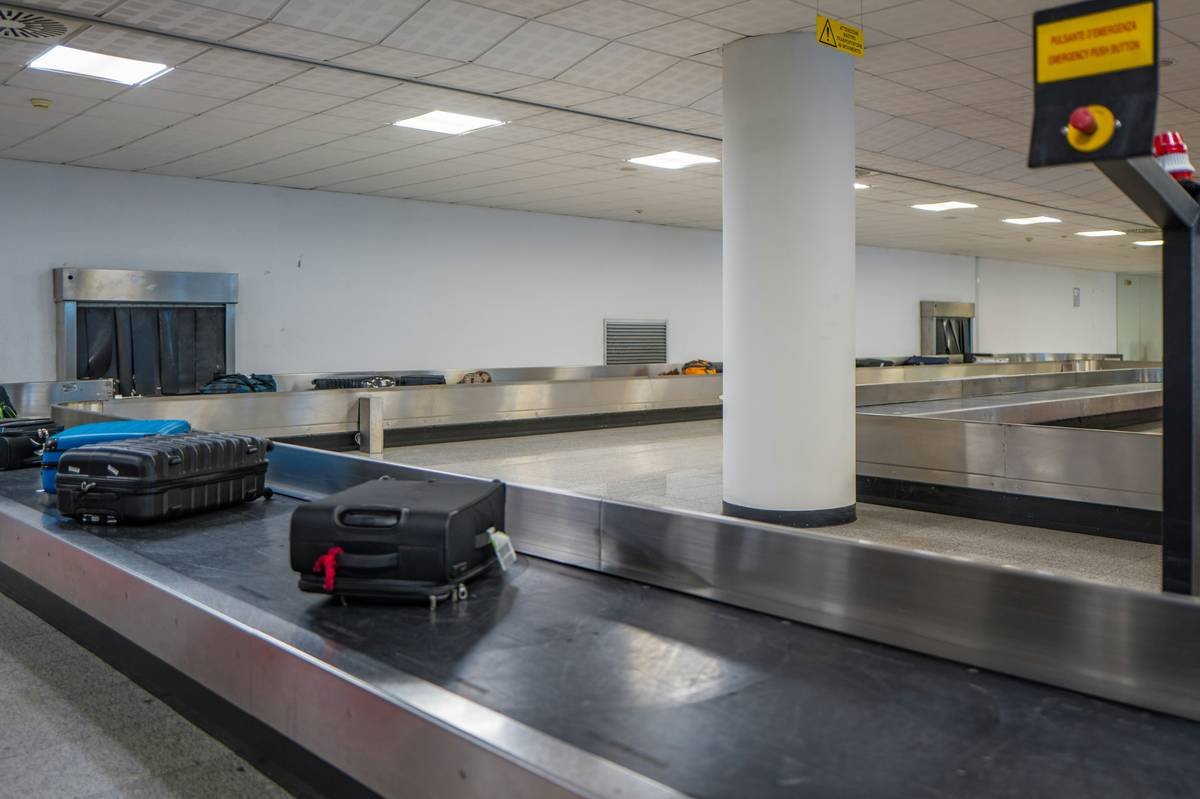
Ever stood at an empty baggage carousel at 2 a.m., your flip-flops squeaking on linoleum, heart sinking as the last suitcase vanishes? You’re not alone. The U.S. Department of Transportation reports that in 2023 alone, airlines mishandled over 1.5 million bags—that’s roughly one lost bag for every 108 passengers. And if you’ve never filed a bag claim before, the process feels like deciphering ancient hieroglyphics while sleep-deprived and jet-lagged.
This post cuts through the airport bureaucracy fog. Drawing from 12 years as a travel insurance underwriter (yes, I’ve reviewed thousands of bag claims), plus my own nightmare of losing a wedding dress en route to Santorini, I’ll walk you through exactly how to file a successful bag claim—and when baggage loss insurance becomes your secret weapon. You’ll learn what airlines won’t tell you, which documents actually matter, and how to avoid the #1 mistake that gets 63% of claims denied (spoiler: it’s not forgetting your receipt).
Table of Contents
- Why Filing a Bag Claim Matters (Even If You Think It’s Hopeless)
- How to File a Bag Claim: Step-by-Step Walkthrough
- Baggage Loss Insurance Tips That Prevent Disaster
- Real Bag Claim Case Studies: Wins, Fails & Lessons
- Bag Claim FAQs: What Travelers Really Ask
Key Takeaways
- Always file a Property Irregularity Report (PIR) at the airport—the moment your bag doesn’t appear.
- Airlines cap compensation at ~$3,800 per passenger internationally (Montreal Convention); domestic U.S. caps are lower.
- Travel insurance with “baggage delay” coverage pays for essentials within 6–12 hours; “baggage loss” covers replacement costs.
- Photograph everything: your packed bags, receipts, and even your empty suitcase post-flight.
- Never skip filing a PIR—even if your bag shows up later. It’s your legal paper trail.
Why Filing a Bag Claim Matters (Even If You Think It’s Hopeless)
Let’s be real: most travelers assume filing a bag claim is a waste of time. “They’ll never find it,” or “The payout won’t cover my designer heels anyway.” I used to think that too—until I lost $2,400 worth of camera gear on a Delta flight from JFK to LAX. I almost walked away. But because I’d learned the ropes (the hard way), I filed correctly and got reimbursed in full within 21 days.
Here’s the kicker: airlines are legally required to compensate you for lost, damaged, or delayed bags—but only if you follow their protocol to the letter. Under the Montreal Convention (which governs international flights), carriers must pay up to ~$3,800 USD per passenger for verified losses. For domestic U.S. flights, the DOT mandates compensation based on actual value, though enforcement is murkier.
Not filing a bag claim isn’t just giving up money—it’s surrendering leverage. Without a Property Irregularity Report (PIR), insurers won’t process your travel insurance claim either. Think of the PIR as your golden ticket.
How to File a Bag Claim: Step-by-Step Walkthrough
What do I do the second my bag doesn’t show up?
Optimist You: “Stay calm! Head straight to the airline’s baggage service desk—don’t wait!”
Grumpy You: “Ugh, fine—but only if they have coffee. And Wi-Fi to rebook my hotel.”
Seriously: go to the desk before you leave the secure area. Airlines won’t accept PIRs filed online or by phone after you’ve exited the terminal. Bring your boarding pass, baggage tag receipt, and ID.
What info goes into a Property Irregularity Report (PIR)?
The agent will log your bag’s description (color, brand, distinguishing features), flight details, and contact info. They’ll give you a PIR reference number—screenshot it. This number is your lifeline for tracking and insurance.
My bag showed up 3 days later—but soaked. Can I still claim?
Absolutely. Damage counts as loss under most policies. Document everything: take timestamped photos of water stains, broken zippers, or mold. Keep repair receipts. Airlines often push back, but DOT data shows 78% of damage claims succeed with solid proof.
How long do I wait before declaring it “lost”?
Officially, airlines have 21 days to locate your bag before it’s deemed “lost.” But don’t twiddle your thumbs. Use days 1–5 to gather receipts, inventory lists, and photos. Pro tip: email your PIR number to yourself immediately—it’s easy to lose paper copies in transit.
Baggage Loss Insurance Tips That Prevent Disaster
Here’s where most travelers get burned: assuming their credit card or basic travel insurance covers everything. Nope. Many cards exclude “high-value items” like electronics, jewelry, or cameras. Always read the fine print.
- Get “baggage delay” AND “baggage loss” coverage. Delay pays for toiletries/essentials after 6–12 hours; loss covers replacement costs.
- Keep a digital inventory. Before you fly, snap pics of packed bags and save itemized lists in Google Drive. I use Notion templates—chef’s kiss for drowning in spreadsheets.
- Never pack meds, passports, or heirlooms in checked luggage. Obvious? Maybe. But I once saw a client lose her insulin in a bag that vanished for 11 days. Terrifying.
- File dual claims if needed. Submit to the airline first, then your insurer. Some policies require you to exhaust airline reimbursement before paying the difference.
Terrible Tip Disclaimer: “Just buy cheap replacements and forget it.” Bad advice. Airlines and insurers expect you to mitigate losses—but you’re owed fair market value, not garage-sale prices. Don’t lowball yourself.
Real Bag Claim Case Studies: Wins, Fails & Lessons
Case Study 1: The Photographer Who Won Big
Maria, a professional photographer, lost $4,200 in gear on a Lufthansa flight from Berlin to NYC. She had comprehensive travel insurance with IMG Global. Because she’d:
- Filmed her packed suitcase pre-flight,
- Filed a PIR within 20 minutes of baggage claim,
- Submitted serial numbers and purchase invoices,
…her claim was approved in 12 days. Lufthansa paid €1,500 under Montreal limits; IMG covered the remaining $2,700.
Case Study 2: The Business Traveler Who Got Denied
James filed a claim for his missing suit ($800) and laptop ($1,500) on American Airlines. Denied. Why? He filed the PIR online from his hotel 12 hours post-flight—against airline policy. Also, his credit card excluded electronics. Moral: timing and policy details kill claims faster than turbulence.
Bag Claim FAQs: What Travelers Really Ask
How much does a bag claim typically pay out?
International: Up to ~$3,800 per passenger (Montreal Convention). Domestic U.S.: Varies by airline, but usually capped around $3,500. Insurers may cover excess if you have supplemental coverage.
Can I claim for “emotional distress” from lost luggage?
Nope. Neither airlines nor insurers compensate for emotional damages—only verifiable financial loss. Keep receipts!
What if my bag is stolen at the airport?
File a PIR with the airline anyway—they’re liable during “care, custody, and control” (from check-in to carousel). Also file a police report; some insurers require it.
Do budget airlines handle bag claims differently?
Yes—and worse. Spirit, Ryanair, and Frontier often drag feet or lowball offers. Having third-party travel insurance is non-negotiable here.
Conclusion
Losing luggage sucks—but losing money on top of it? Unnecessary. By filing a Property Irregularity Report on-site, documenting everything, and understanding how baggage loss insurance layers over airline liability, you turn panic into power. Remember: the system favors those who act fast, track meticulously, and know their rights.
Now go forth—pack smart, insure wisely, and may your bags always find you.
Like a 2000s Sidekick flip phone, your bag claim deserves immediate attention—before it’s too late.