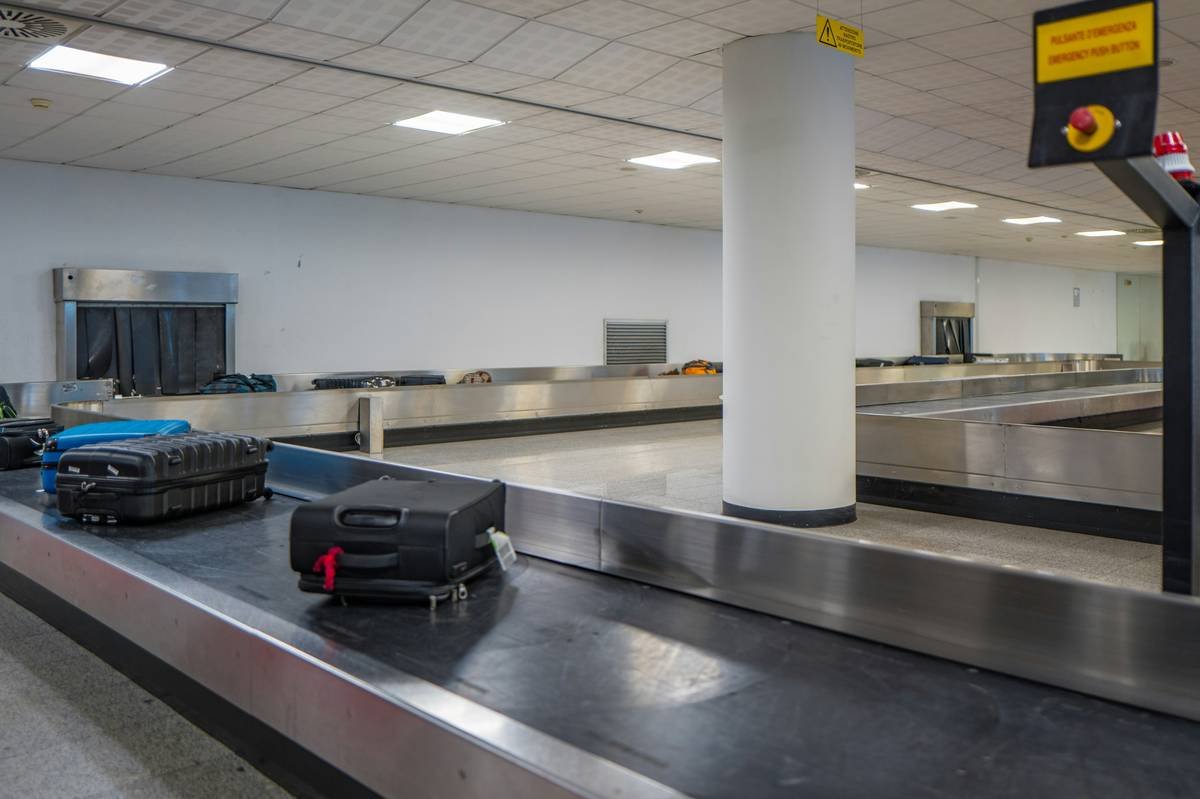
Ever stood at a baggage carousel for 45 minutes, watching strangers claim their neon duffels while your black roller—packed with $800 worth of camera gear and your lucky socks—never shows up? Yeah. That hollow pit in your stomach isn’t just jet lag. It’s the sound of your trip unraveling, one lost zipper pull at a time.
If you’ve ever forked over $200 for “basic” travel insurance only to learn it excludes baggage delay or caps reimbursement at $250 while your designer luggage cost $650… welcome to the club. This post cuts through the fine print fog so you actually understand **travel luggage insurance**—what it covers, what it hides, and how to get compensated when the airline ghosts your suitcase like a bad Tinder date.
You’ll learn:
- Why standard travel insurance often fails on baggage claims
- How to choose coverage that matches your actual risk (not the insurer’s profit margin)
- Real steps to file a claim—and win
- When standalone baggage policies beat bundled plans
Table of Contents
- Key Takeaways
- The Harsh Reality of Lost Luggage (And Why Airlines Won’t Save You)
- How to Choose Real Travel Luggage Insurance That Pays Out
- Pro Tips for Maximizing Your Coverage Without Getting Scammed
- Real World Case Studies: When It Worked (and When It Didn’t)
- FAQs About Travel Luggage Insurance
- Conclusion
Key Takeaways
- Airlines reimburse only ~$1,750 per passenger for lost luggage internationally (Montreal Convention)—but often drag feet and deny claims.
- Most bundled travel insurance policies cap baggage loss at $500–$1,000 and exclude high-value items like electronics or jewelry unless specifically declared.
- Standalone baggage insurance (like from Allianz or Travel Guard) offers higher limits, faster payouts, and clearer terms.
- You must file a Property Irregularity Report (PIR) with the airline within 24 hours to even qualify for reimbursement.
- Never pack irreplaceables (prescriptions, passports, heirlooms) in checked luggage—no insurance replaces emotional value.
The Harsh Reality of Lost Luggage (And Why Airlines Won’t Save You)
In 2023 alone, U.S. airlines mishandled 2.3 million bags—that’s roughly 4.2 bags per 1,000 passengers (DOT Bureau of Transportation Statistics). And “mishandled” includes delayed, damaged, or outright lost. But here’s the kicker: even when they admit fault, airlines operate under strict liability limits.
Internationally, the Montreal Convention caps airline liability at about $1,750 per passenger—but good luck getting that without a fight. Domestically in the U.S., there’s no set limit, yet carriers routinely lowball settlements or demand absurd documentation.
I learned this the hard way in Lisbon. My checked bag—containing my only pair of prescription glasses, hiking boots, and a week’s worth of meds—vanished after a TAP Air Portugal connection. The airline rep shrugged: “File online. Maybe in 6 weeks.” Meanwhile, I spent €300 on emergency essentials… only to find out later my “comprehensive” travel policy excluded baggage delay under 12 hours.
Optimist You: “But travel insurance covers this!”
Grumpy You: “Only if you read the exclusions section in 8-pt font while squinting through airport Wi-Fi.”
How to Choose Real Travel Luggage Insurance That Pays Out
What does “travel luggage insurance” actually cover?
True baggage protection includes three layers:
- Baggage loss: Reimbursement when your bag is permanently lost (usually after 5–7 days unlocated).
- Baggage delay: Covers emergency essentials (toiletries, clothes) if your bag is delayed 6+ hours.
- Baggage damage: Repairs or replacement for torn zippers, broken wheels, water damage, etc.
Step 1: Audit Your Risk
Are you checking a $900 Rimowa full of tech? Or carrying a backpack with spare undies? High-value trips need higher limits. Most standard policies max out at $750—useless if your gear costs more.
Step 2: Compare Policy Structures
- Bundled travel insurance: Often sold with flights (e.g., Expedia, Kayak). Convenient but limited. Check sub-limits—many cap “electronics” at $250 total.
- Standalone baggage insurance: Offered by specialists like Allianz Global Assistance, Travel Guard, or Berkshire Hathaway Travel Protection. Higher limits ($2,500+), broader item coverage, and dedicated claims teams.
Step 3: Read the Exclusions (Yes, All of Them)
Watch for these common traps:
- “Per article” limits (e.g., $200 max per item—even if your bag is $600)
- Exclusion of “fragile” or “high-risk” items (cameras, drones, musical instruments)
- Requirement to use “approved locks” (TSA-approved only)
Pro Tips for Maximizing Your Coverage Without Getting Scammed
- File a PIR immediately. The moment you realize your bag’s missing, go to the airline’s baggage service desk. Demand a Property Irregularity Report (PIR). No PIR = no claim—period.
- Keep receipts for emergency purchases. If delayed, buy essentials (socks, toothpaste, charger) and save every receipt. Policies typically reimburse $50–$150/day for 3–5 days.
- Photograph your packed luggage. Before checking, snap a pic of everything inside. Makes valuation 10x easier during claims.
- Declare high-value items upfront. If you’re packing a $1,200 lens, email your insurer beforehand. Many allow “scheduled personal property” endorsements.
🚫 Terrible Tip Disclaimer: “Just rely on your credit card’s travel insurance.” Nope. Most premium cards (Amex Platinum, Chase Sapphire) offer baggage delay coverage—but often exclude loss/damage or require you to pay the full fare with that card. Always verify.
Rant Time: Why do insurers use terms like “reasonable expenses” without defining them? Is a $40 hotel robe “reasonable” if you’re stranded in Oslo in February? Fight me, adjusters.
Real World Case Studies: When It Worked (and When It Didn’t)
Case 1: The Photographer Who Won
Sarah, a destination wedding photographer, flew to Bali with $4,000 in gear. Her bag never arrived. Because she’d purchased Allianz’s OneTrip Prime plan ($129) with $3,000 baggage coverage and had pre-declared her equipment, she filed a claim with her PIR, gear receipts, and photos. Paid in full within 11 days.
Case 2: The Backpacker Burned
Mark booked a $39 “travel protection” add-on via a budget airline site. His pack was stolen from baggage claim. Denied. Why? The policy excluded “theft after delivery” and capped all electronics at $150. His MacBook alone was $1,200.
Moral? Cheap coverage = expensive lessons.
FAQs About Travel Luggage Insurance
Does travel luggage insurance cover theft from my hotel room?
Generally, no. Baggage loss coverage applies only during transit (airline, train, cruise). For hotel theft, you’d need “personal belongings” coverage—often a separate rider.
How long does a claim take?
With reputable providers (Allianz, IMG), 5–14 business days if documentation is complete. Budget insurers can drag it to 8+ weeks.
Can I buy it after booking my trip?
Yes—usually up to 24 hours before departure. But pre-existing condition waivers (if bundled with medical coverage) require purchase within 10–21 days of initial trip deposit.
Is carry-on covered?
Rarely. Most policies only cover checked baggage. For carry-ons, rely on homeowners/renters insurance or specialized riders.
Conclusion
Losing your luggage sucks—but losing money and your stuff because of weak insurance? Unforgivable. Real travel luggage insurance isn’t about hoping for the best; it’s about preparing for the worst with a policy that actually pays.
Remember: airlines won’t move fast, credit cards won’t cover everything, and “basic” plans are basic for a reason. Audit your gear, read exclusions like a lawyer, and choose coverage that matches your reality—not a marketer’s fantasy.
Now go pack that backup pair of contacts. And maybe skip the fancy suitcase until you’ve got the right policy backing it.
Like a 2004 Motorola Razr—sleek, essential, and always there when your main device flakes.