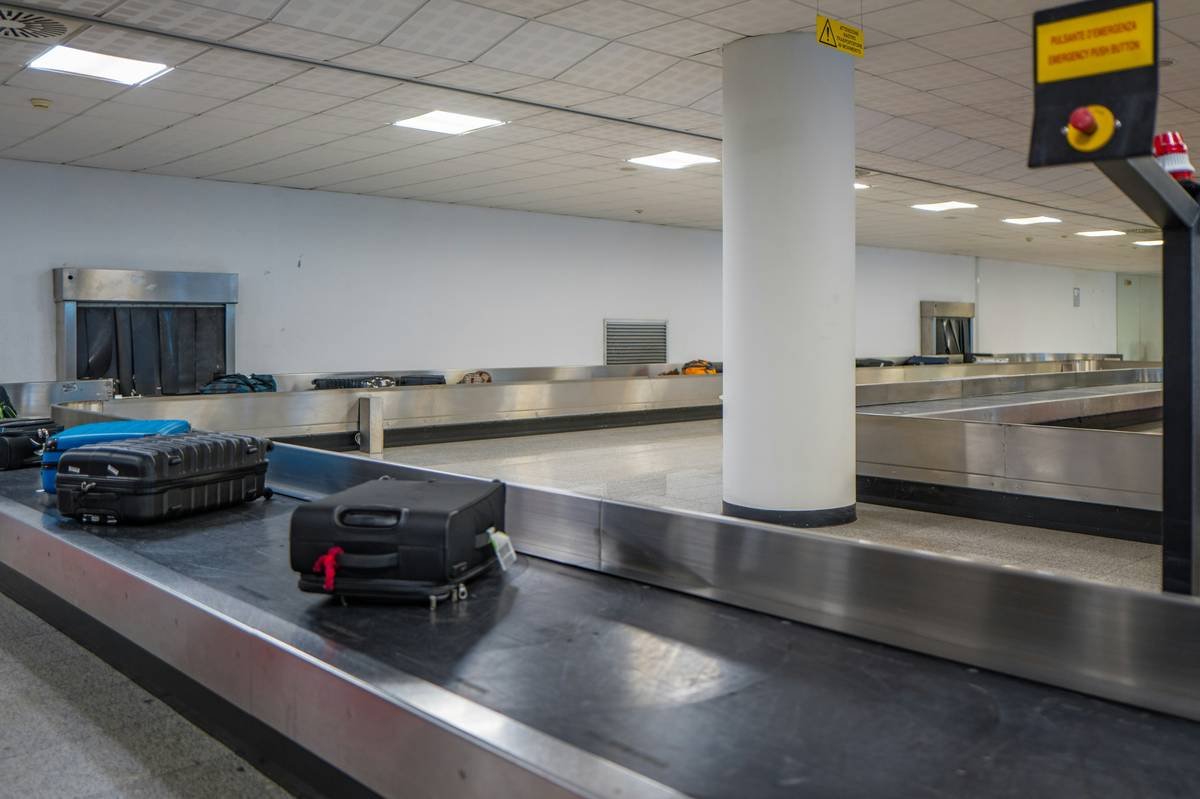
Ever stood at a baggage carousel for 45 minutes, watching strangers haul off their matching polka-dot suitcases while yours—stuffed with prescription meds, your only pair of contact lenses, and that limited-edition Tokyo streetwear jacket—is… nowhere? You’re not alone. According to the SITA Baggage Report 2023, airlines mishandled 22.7 million checked bags globally—that’s roughly 4.2 bags per 1,000 passengers. And while most show up within 48 hours, some vanish forever.
If you’ve ever cursed an airline’s “we’ll call you when it turns up” script (spoiler: they rarely do), this post is your lifeline. We’ll break down exactly what baggage loss insurance covers, how to file a winning claim, which policies are actually worth buying—and why that “free” coverage on your credit card might leave you stranded in flip-flops.
By the end, you’ll know:
✅ How baggage loss insurance *really* works (hint: it’s not just about reimbursement)
✅ Which providers deliver fast payouts vs. runarounds
✅ The #1 mistake travelers make that voids their claims
✅ Real stories from people who got screwed—and those who got paid
Table of Contents
- Why Baggage Loss Hurts More Than You Think
- How to Choose and Use Baggage Loss Insurance Like a Pro
- 5 Must-Know Tips Before You Buy Baggage Loss Insurance
- Real-World Case Studies: When It Works (and When It Doesn’t)
- Baggage Loss Insurance FAQs
Key Takeaways
- Airline liability for lost luggage is capped at ~$1,700 internationally (U.S. DOT)—often far below actual replacement costs.
- Standalone baggage loss insurance typically covers $500–$3,000 per person, with faster claims than airlines.
- Most policies exclude high-risk items (jewelry, electronics over $500, perishables)—read exclusions carefully!
- Filing a Property Irregularity Report (PIR) with the airline within 24 hours is non-negotiable for any claim.
- Credit card travel insurance often has hidden caps (e.g., $500 total) and requires full trip payment via that card.
Why Baggage Loss Hurts More Than You Think
Losing your bag isn’t just inconvenient—it’s emotionally and financially devastating. I learned this the hard way during a business trip to Lisbon. My checked suitcase held my laptop, presentation slides, and the only dress shoes I owned. The airline declared it “lost” after 7 days. Their payout? €800—barely enough to replace the laptop, let alone cover emergency clothing or hotel laundry fees. No compensation for the client meeting I nearly botched.
Here’s what airlines won’t tell you: Under the Montreal Convention (which governs international flights), carriers are liable for up to 1,288 Special Drawing Rights (~$1,700 USD) per passenger for lost, damaged, or delayed baggage. Domestically in the U.S., there’s no fixed cap—but airlines set arbitrary limits (usually $3,500). And crucially, they don’t cover indirect costs: missed excursions, rental fees, or emotional distress.

That’s where baggage loss insurance shines. Unlike airline liability, it covers:
- Full replacement value of contents (up to policy limit)
- Essential purchases while waiting (toiletries, clothing)
- Baggage delay benefits ($50–$200/day for essentials)
- Copied PIR reference number
- List of lost items with estimated values
- Proof of purchase (receipts, credit card statements)
- Airline correspondence
- Avoid “bundled” policies with low limits. Some cheap plans offer only $250 for baggage loss—useless if you’ve lost a $2,000 camera kit.
- Check sub-limits. Many policies cap electronics at $500 or jewelry at $200—even if your total coverage is $2,500.
- Credit card coverage ≠ comprehensive coverage. Chase Sapphire Preferred offers $500 per covered traveler—but only if you paid for the entire trip with the card. Miss that detail? Claim denied.
- “Lost” means 7+ days unlocated. Delays under 7 days fall under “baggage delay,” a separate (but often included) benefit.
- Never check irreplaceables. Passports, medications, laptops—carry them on. No insurance replaces your insulin or visa documents.
Optimist You: “Insurance will save me!”
Grumpy You: “Unless you skip the PIR or pack your Rolex. Then you’re outta luck.”
How to Choose and Use Baggage Loss Insurance Like a Pro
Step 1: Decide if You Need Standalone Coverage
If your trip involves expensive gear (photography equipment, medical devices) or you’re flying budget airlines with poor track records (looking at you, Ryanair), standalone travel insurance with baggage loss coverage is wise. Compare plans on sites like InsureMyTrip or Squaremouth—they let you filter by baggage benefit amounts.
Step 2: File a Property Irregularity Report (PIR) IMMEDIATELY
This is the golden rule. At the airport baggage desk, demand a PIR form—don’t accept verbal promises. Note flight details, bag tag number, and description. Without this, no insurer will pay you. I’ve seen claims denied because travelers waited until day 2 “to avoid the line.” Don’t be that person.
Step 3: Document Everything
Take photos of your packed bag before departure. Keep receipts for all essential purchases made post-loss (yes, even that $8 toothbrush). When filing your insurance claim, include:
Step 4: Submit Within Deadline Windows
Most insurers require claims within 30–90 days. Travel Guard? 60 days. Allianz? 90. Set a phone reminder the moment your bag goes missing.
5 Must-Know Tips Before You Buy Baggage Loss Insurance
Terrible Tip Disclaimer: “Just buy the cheapest policy online!” Nope. A $29 plan might exclude “high-theft” destinations like Barcelona or have a 48-hour claims processing wait. Do your homework.
Real-World Case Studies: When It Works (and When It Doesn’t)
Success Story: Sarah K., Bali Wedding Photographer
Sarah’s checked bag—with $4,200 in camera gear—vanished en route to Ubud. She filed a PIR within 1 hour, submitted her insurer claim (via World Nomads) with receipts and gear serial numbers in 3 days. Payout: $3,000 (her policy limit) in 12 business days. Key win: She’d declared high-value items during purchase.
Failure Story: Mark T., Business Traveler to Frankfurt
Mark’s laptop and suits went missing. He assumed his Amex Platinum would cover it—but he’d paid for the flight with miles, not the card. Claim denied. He recovered €600 from Lufthansa after 8 weeks of emails. Moral: Credit card coverage has fine print thicker than a German novel.
Baggage Loss Insurance FAQs
Does baggage loss insurance cover stolen carry-ons?
Generally, no—unless the theft occurred during transit (e.g., snatched during boarding). Most policies only cover checked baggage handled by the airline.
How long until I’m paid after filing a claim?
Reputable insurers (Allianz, IMG, Travel Guard) process claims in 5–15 business days if documentation is complete. Delays happen if receipts are missing or values seem inflated.
What if my bag is found after I’ve been reimbursed?
You must return the bag to the insurer or refund the payout. Keeping both = insurance fraud.
Are designer clothes covered at retail price?
Only if you provide original receipts. Otherwise, insurers use depreciation models (e.g., 20% off for “gently used”).
Is baggage loss insurance worth it for short trips?
If you’re checking a bag with >$500 in contents—yes. A 5-day beach trip with just swimsuits? Probably not.
Conclusion
Baggage loss insurance isn’t about paranoia—it’s about peace of mind. With 1 in every 234 checked bags going truly AWOL (SITA, 2023), hoping for the best is a gamble you can’t afford. Choose a policy with clear baggage loss terms, file that PIR like your vacation depends on it (it does), and never check what you can’t live without.
Because the real cost of lost luggage isn’t just dollars—it’s the wedding photos never taken, the job interview missed, or the prescription unrefilled. Protect your journey, not just your suitcase.
Like a 2000s flip phone, some things deserve backup plans.
Haiku:
Carousel spins slow—
Where’s my bag? Gone with the wind.
Insurance answers.