
Ever stood at an airport carousel watching suitcase after suitcase disappear—except yours? You’re not alone. According to the International Air Transport Association (IATA), airlines mishandle 2.2 million bags annually worldwide. And if you’ve ever tried filing a claim without a property irregularity report, you know it’s like yelling into a void while your favorite sweater vanishes forever.
This post cuts through the chaos. You’ll learn exactly what a property irregularity report is, why it’s non-negotiable for baggage loss insurance claims, and how to file one correctly—plus real mistakes travelers (including me) have made so you don’t repeat them. We’ll also unpack airline obligations under international treaties like the Montreal Convention, share pro tips from claims adjusters, and reveal what travel insurers actually look for when deciding whether to cut you a check.
Table of Contents
- What Exactly Is a Property Irregularity Report (PIR)?
- How to File a Property Irregularity Report: Step-by-Step
- 7 Must-Know Best Practices for PIR Success
- Real Case Study: How One Traveler Got $1,200 Reimbursed
- Property Irregularity Report FAQs
Key Takeaways
- A property irregularity report (PIR) is the official document airlines issue when your luggage is delayed, damaged, or lost.
- You must file it before leaving the airport—retroactive reports are rarely accepted.
- Without a PIR, most travel insurance policies will deny your baggage loss claim outright.
- Under the Montreal Convention, airlines are liable up to ~$1,700 per passenger for lost baggage—if you have proof via a PIR.
- Inspect every detail on the PIR form; errors in bag description or flight info can sink your claim.
What Exactly Is a Property Irregularity Report (PIR)?
Think of a property irregularity report as your luggage’s police report. Issued by the airline at the airport baggage service office, it’s a standardized WorldTracer form (used globally by IATA members) that logs the specifics of your missing, damaged, or delayed bag. It includes your contact info, flight details, bag description, and a unique reference number you’ll need for all future correspondence.
Here’s the kicker: most travelers assume “lost luggage” means gone forever. But airlines classify incidents in three buckets:
- Delayed (most common): Bag arrives within 5 days.
- Damaged: Wheels cracked, zippers torn, contents spilled.
- Lost/Pilfered: Not located after 5+ days; may involve theft.
Each scenario triggers different compensation rules—and all require a PIR.
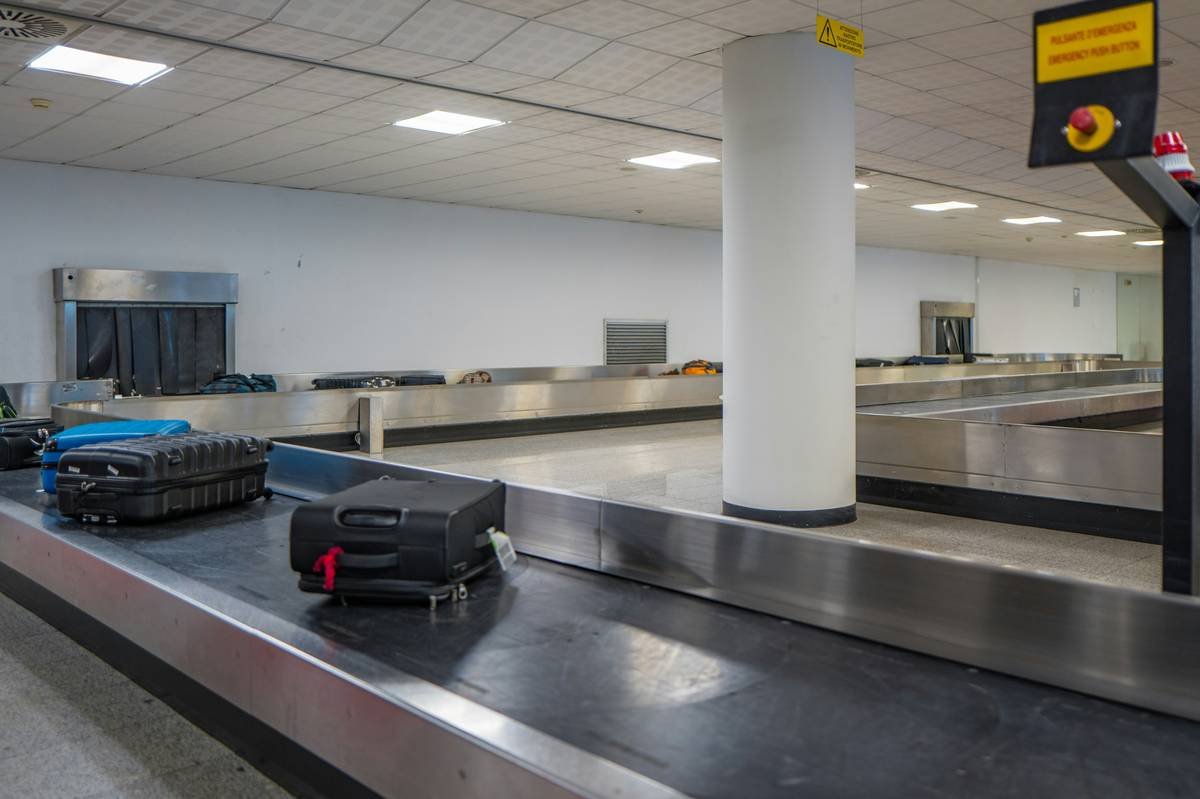
Why does this matter for your travel insurance? Because insurers treat the PIR as prima facie evidence that a loss occurred. No PIR = no verifiable incident = automatic denial. I learned this the hard way during a layover in Frankfurt when I skipped the baggage desk, assuming my bag would “just show up.” It didn’t. And my otherwise solid Allianz plan rejected my $800 claim with one line: “Missing required documentation: PIR.”
How to File a Property Irregularity Report: Step-by-Step
Step 1: Head Straight to the Airline’s Baggage Service Office
Don’t wait. Don’t go home. Go directly to the desk—usually near the baggage claim area with signs like “Baggage Resolution” or “Lost Luggage.” If you’re unsure, ask any gate agent; they’ll radio ahead.
Optimist You: “This’ll take five minutes!”
Grumpy You: “Ugh, fine—but only if they have chairs. My feet are melting into these airport tiles.”
Step 2: Provide Exact Details—No Guessing
Bring your boarding pass and baggage tag receipt (that little stub glued to your ticket). Be ready to describe your bag with surgical precision: brand, color, size, distinguishing marks (e.g., “red ribbon tied to handle,” “scuff on bottom right corner”). Vague descriptors like “black suitcase” won’t cut it—airlines process hundreds of identical bags daily.
Step 3: Get the Reference Number—and Write It Down
The agent will enter your info into WorldTracer and give you a 10-digit PIR reference number (e.g., FRA12345678). Snap a photo of the printed copy and store it in three places: email, cloud drive, and your wallet. Airlines lose paper copies more often than you’d think.
Step 4: Submit It to Your Insurer Within 24–48 Hours
Most travel insurance policies (like those from IMG or World Nomads) require you to notify them within 48 hours of discovering the loss. Forward your PIR PDF along with photos of your bag and receipts for essential replacement items (toothbrush, underwear, etc.).
7 Must-Know Best Practices for PIR Success
- File before exiting the secure area. Once you clear customs and leave, your window slams shut.
- Take timestamped photos of your empty hands. Seriously—stand beside the empty carousel with your phone showing the date/time. It proves you were there when the bag didn’t arrive.
- Insist on “lost” vs. “delayed” if appropriate. If your bag contains valuables (camera, medication), push for “lost” classification early—it speeds up indemnity payments.
- Know the Montreal Convention limits. Airlines cap liability at ~$1,700 USD per passenger. Anything above that comes from your travel insurance—if your PIR is solid.
- Never sign anything vague. If the form says “bag received intact” but it’s torn, cross it out and initial the change.
- Follow up daily after Day 3. Call the airline using your PIR number. Silence = your bag gets deprioritized.
- Keep receipts for interim purchases. Insurers reimburse “reasonable necessities” (under $100/day typically) while waiting for bag recovery.
🚫 Terrible Tip Disclaimer
“Just call the airline later from home.” NO. This is the #1 reason valid claims get denied. The PIR must be filed at the airport on the day of arrival. Period.
Rant Section: My Pet Peeve
Why do baggage agents act like they’re doing you a favor by filing a PIR? You paid for checked luggage! It’s their legal obligation under international law—not a kindness. One time in Lisbon, an agent rolled her eyes and said, “Are you sure it’s not at home?” Ma’am, I’m standing in Portugal. My house is in Chicago.
Real Case Study: How One Traveler Got $1,200 Reimbursed
Last winter, Sarah K. flew from Denver to Reykjavik via Icelandair. Her checked roller, packed with winter gear for a photography tour, never arrived. She immediately filed a PIR at Keflavík Airport (reference #KEF98765432), noting “Canon R5 camera + lenses inside” in the remarks.
After 7 days with no trace, she submitted the PIR, original camera receipts ($3,200), and a letter from her tour operator confirming the missed shoots. Her insurer, Berkshire Hathaway Travel Protection, approved $1,200—the policy’s baggage limit—within 10 business days.
Key success factors?
- PIR filed same-day with accurate contents noted
- High-value items documented with receipts
- Proof of consequential loss (missed tour)
Without that PIR, she’d have gotten $0 from both airline and insurer.
Property Irregularity Report FAQs
Can I file a PIR online?
No. Despite digital advances, IATA requires in-person filing at the arrival airport. Some airlines (like Delta) offer post-filing tracking online—but the initial report must be physical.
What if the airline refuses to file a PIR?
Cite Article 31 of the Montreal Convention: passengers have the right to a written report upon request. Escalate to a supervisor or contact your country’s aviation authority (e.g., DOT in the U.S.).
Does travel insurance cover everything the airline doesn’t?
Yes—if your policy includes “baggage loss/delay” coverage and you’ve filed a PIR. Most comprehensive plans (e.g., GeoBlue, SafetyWing) pay up to $1,000–$2,000 beyond airline limits.
How long do I have to file a claim after getting a PIR?
Typically 30–90 days, but check your policy wording. However, notify your insurer within 48 hours to avoid suspicion of fraud.
Conclusion
A property irregularity report isn’t just paperwork—it’s your passport to reimbursement when luggage goes rogue. File it on-site, nail the details, and pair it with solid travel insurance. Do that, and you’ll turn a travel nightmare into a reimbursable inconvenience. Skip it, and you’re gambling with your gear, your trip, and your peace of mind.
So next time that carousel spins empty, don’t walk away. March to that baggage desk like you own the place. Your future self—with dry socks and a functioning camera—will thank you.
Like a Tamagotchi, your PIR needs immediate attention—or it dies.